Helping you design & decorate your home
Have you tried to decorate your home but something is missing? There is a science behind interior design which most people don’t know about, & once you learn it – decorating is easy!
COLOUR
We all know that the right colour can massively alter the feeling of a room. Colour can help to bring warmth, or give a cooler feel, it can be light & airy or dark & moody. It is also known to tie to certain eras, like the 70’s, & the combinations can give contrast or be subtle.
CONTRAST
Contrast is about the differences between two pieces. This can be with colour like black & white, or with texture being sleek or soft. Even with finishes like flat & shiny. Contrast highlights both at the same time & can really draw your eye.
LIGHT
Light is necessary to be able to see what we are doing, but it also brings interest. It is best to have 3 types of lighting in every room – Natural, Task & Ambient. These allow for the lighting conditions to be changed as required & can give a completely different feel depending on your mood. Light can be soft & relaxing or stark & fresh. It can also throw patterns on a wall or change the colour of a room.
BALANCE
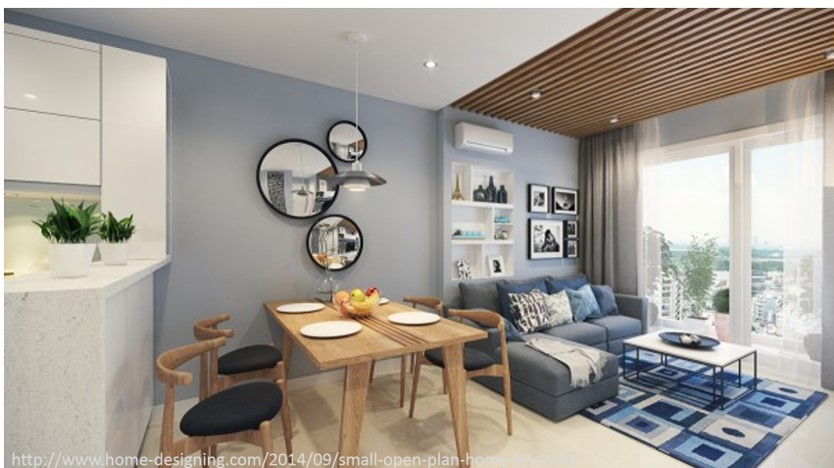
This is the most understated element. Balance is important for a feeling of consistency. It allows you to repeat an element in the room or across rooms. If you have a timber dining table, add a timber chopping board in the kitchen, or lamp with timber legs in the lounge room. Balance can be achieved with colour, shape, size, texture, light & pattern.
SCALE & PROPORTION
This refers to having an oversized or undersized item in the room to give emphasis. This is seen regularly with large artwork or clocks. In the alternative, it can be great to undersize items to make a room look larger.
EMPHASIS
Emphasis is the feature of the room. It draws the eye & makes a statement. This can be done with colour, texture, pattern, size, shape or lighting effects. It includes painted feature walls, patterned rugs or a massive island bench.
TEXTURE
Texture is in every item. Even the sleek, straight lines are an absence of texture. Texture can make a room cosy & relaxed, or slick & hygienic. Texture can be brought in with fabric, bricks, timber, stone, metal, wallpaper, linens & plants. You are best to think about what YOUR design style is to find what textures best suit YOUR look.
DETAILS
The attention is in the detail. This is the cherry on top. It can be a shadow line or bevel edge in kitchen cabinetry, piping on cushions, turned legs on a table or different coloured tile grout. The finer details can easily be overlooked when building or renovating as you are focused on the overall look, not each element. But the devil is in the detail.
UNITY & VARIETY
Unity is the same thing, variety is different things. The combination of the two allows you to group different items together which have a unifying theme, such as all white vases of different sizes, cushions with similar colours or patterns, or multi-coloured chairs of the same design. This helps to unify a room of random pieces & gives depth to the design, rather than just having everything the same.
RHYTHM / VISUAL INERTIA
Rhythm is repetition to draw your eye through a space. This can be done with colours, shapes, lighting, balance & proportion. Visual Inertia is similar, with the pattern of the items making the illusion of movement, like zebra stripes in a group.
Most of us have an eclectic mix of items in our homes, with heirlooms & favourite pieces. Now you get to re-position these beloved pieces to make your interiors look fresh & balanced, as well as having fun interior decorating!
If you need assistance with your home, click here to speak to your own Interior Designer.
You can also find me on my socials for the latest projects –https://www.facebook.com/MystereeDesigns https://www.instagram.com/mysteree_designs/